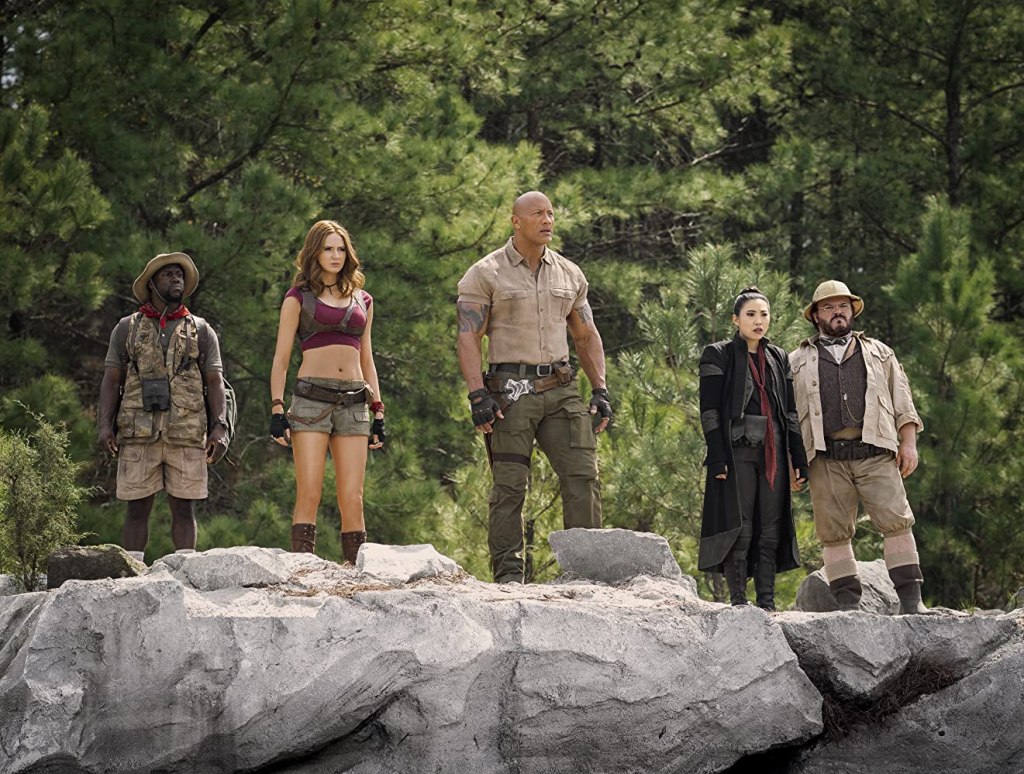
When Jumanji: Welcome to the Jungle hit cinemas in late 2017 it became an unlikely box-office hit; after all, previous reboots of 80s/90s favourites hadn’t exactly gone down well. Audiences were won over by this fresh take, that made subtle reference to the original without getting bogged down in fan-service. It was inevitable that a sequel would follow, and we were as excited as anyone to see what the team would come up with second time around.
Plot-wise Jumanji: The Next Level sticks very close to the original (should that be “original reboot”?): four teenagers get sucked into a video game which they must complete in order to return home. Each player takes on the persona of a video game character, complete with strength and weaknesses. The twist this time around is that the teenagers are joined by a couple of old fogeys (Dannies DeVito and Glover). This feels very much like another ‘adventure of the week’ episode, rather than a continuation of a bigger story. It’s not exactly bad, but it lacks the element of surprise and originality that made Welcome to the Jungle so enjoyable. Lots of the jokes are retreads and the constant gags about teaching old people how to play video games illicit chuckles, rather that the spontaneous belly laughs you got with the first one. In fact there are a number of ways in which Next Levels fails to meet the standard set for it.
For all WTTJ’s silliness, the plot managed to hold itself together quite well. Unfortunately the same isn’t true of the sophomore effort. There are just a few too many moments where things happen for plot convenience, rather than because they actually make sense within this world, and the fact that these moments can be directly compared to similar instances in the previous instalment, only makes them more jarring.
In WTTJ the four leads stumble across the game while stuck in detention. It makes sense that they decide to play the game in this moment, because a) it is a welcome distraction from their current situation, and b) they have absolutely no idea what is about to happen. In Next Level, on the other hand, the foursome know exactly what this game is capable of, so the idea that Spencer would voluntarily re-enter it is tenuous at best, no matter how crappy a time he is having at NYU.
Then there’s the matter of the game’s sentience. It is heavily implied that the game chooses players in order to teach them a valuable life lesson. In the previous instalment the thing that landed each of the characters in detention, is the character flaw that their time in Jumanji will ultimately help them correct (Bethany is vain, Martha is self-righteous, Fridge is arrogant, Spencer is a pushover). It makes sense then, that the game chooses Eddie and Milo, as the pair have unresolved issues which the game helps them to overcome. Spencer and Martha have also lost their way slightly since we last saw them, so at a push we’ll accept that the game wanted another crack at them. But why did it bring back Fridge, Bethany and Alex? They all seemed just fine, and none of them have any significant character growth in this film.
Similarly, when it comes to choosing their game avatars, the choice is suddenly, inexplicable removed. Well, not completely inexplicably, it’s clearly just an excuse to let the Rock and Kevin Hart do their best Devito and Glover impression; but within the context of the film, it’s inexplicable. The game, as previously mentioned, has a plan, so why would it intentionally put all the players in the wrong avatars, only to have them switch places very easily?
Then there’s the question of the video game characters themselves; two extra players means two new avatars, in the form of Ming (Akwafina) and, *spoiler alert* a horse. Herein lies our biggest issue with this film: the Ming character isn’t necessary to complete the game, she is only there to accommodate the expanded roster of players. Compare this to WTTJ, where the group have to work together in order to get to the end; where Alex (Nick Jonas/Colin Hanks) is stuck in the game for twenty years, precisely because it is impossible to complete without the full team. Nothing that Ming does in game couldn’t have been done just as easily by one of the other characters – the one time that she appears to be useful ends up being a misdirect.
This may all seem like unnecessary nit-picking – it is just a popcorn movie after all – but if just a little more thought had been put into the script, all of these issues could have been ironed out. Ultimately, the lack of thought is what stops this sequel from reaching the heady heights of its far superior predecessor.
 Cinema Sisters